
Special education teachers fulfill crucial roles, adapting instruction and fostering inclusive learning environments for diverse students, as detailed by the BLS handbook.
The Growing Need for Special Education Professionals
The demand for qualified special education teachers is demonstrably increasing, driven by evolving understandings of diverse learning needs and a commitment to inclusive education. The U.S. Bureau of Labor Statistics highlights this growing field, emphasizing the critical role these educators play in supporting students with disabilities. This need extends across various settings, including public schools, specialized classrooms within institutions, and even state correctional facilities, as evidenced by Michigan Civil Service Commission job specifications.
Humboldt County Office of Education’s focus on clarifying job classifications further underscores the dynamic nature of the profession. The increasing awareness of different disabilities and the push for individualized learning plans – IEPs – contribute significantly to this demand. Professionals are needed to effectively assess students, design tailored instructional plans, and collaborate within multidisciplinary teams to ensure optimal student outcomes. This expanding role necessitates continuous professional development and a dedication to best practices.
Defining Special Education and its Scope
Special education is a meticulously designed instructional process, providing tailored support to students with identified disabilities, impacting their learning. This encompasses a broad spectrum of needs, requiring educators to adapt curriculum and employ specialized strategies. As outlined in resources like the Occupational Outlook Handbook, special education isn’t a singular discipline, but rather a diverse field with various specialties.
The scope extends beyond traditional classroom settings, encompassing roles within state mental health facilities, educational centers, and correctional institutions, as detailed by the Michigan Civil Service Commission. Humboldt County Office of Education emphasizes the importance of individualized educational plans (IEPs) as central to this process. Effectively, special education involves assessment, planning, implementation, and ongoing review of student progress, demanding a collaborative approach with parents, administrators, and other professionals to ensure equitable access to quality education.
Core Responsibilities & Duties
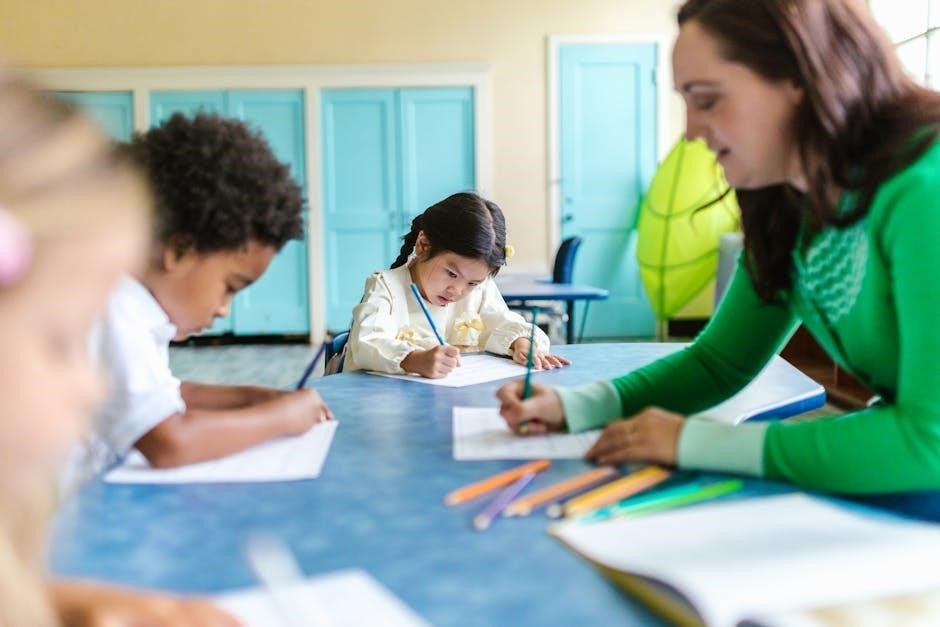
Core duties involve implementing educational plans, conducting assessments, and collaborating within a team to support student success, as highlighted in job specifications.
Individualized Education Program (IEP) Development
A central responsibility of special education teachers is the development of Individualized Education Programs (IEPs). This process, as indicated in various job descriptions, requires a deep understanding of each student’s unique needs and strengths. Teachers actively participate in IEP meetings, collaborating with parents, administrators, counselors, and therapists to create tailored learning plans.
IEP development involves setting measurable goals, determining appropriate accommodations and modifications, and outlining specialized instruction. The Humboldt County Office of Education emphasizes the teacher’s role in assessing student progress and reviewing programs. Teachers must document student performance and contribute to data-driven decisions regarding IEP revisions. Effectively crafted IEPs are essential for ensuring students with disabilities receive the support necessary to thrive academically and socially, aligning with legal requirements like IDEA.

Student Assessment and Evaluation

Special education teachers are integral to the ongoing assessment and evaluation of students with disabilities. As highlighted by the Humboldt County Office of Education, teachers actively participate in student assessments, contributing to a comprehensive understanding of each learner’s abilities and challenges. This extends beyond standardized testing to include observations, curriculum-based assessments, and analysis of student work.
Evaluation data informs instructional planning and IEP development, ensuring interventions are targeted and effective. Teachers must be proficient in administering and interpreting various assessment tools. The Michigan Civil Service Commission job specification notes the need for teachers to complete a variety of assignments, including assessment. Accurate and thorough evaluation is crucial for monitoring student progress, making informed decisions about program modifications, and advocating for appropriate support services.
Instructional Planning and Implementation
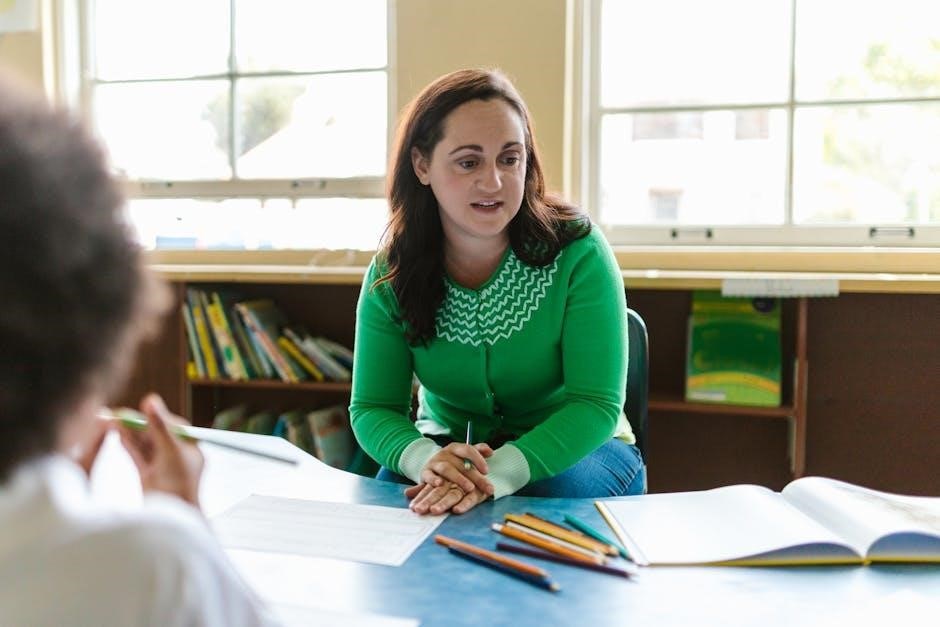
Special education teachers design and implement individualized instruction based on student needs, as outlined in their Individualized Education Programs (IEPs). The Humboldt County Office of Education emphasizes that teachers are responsible for implementing students’ educational plans. This involves creating engaging lessons, selecting appropriate materials, and utilizing evidence-based teaching strategies.
Effective implementation requires differentiation to address diverse learning styles and abilities. Teachers adapt curriculum, modify assignments, and provide accommodations to ensure access and promote success. The Michigan Civil Service Commission job specification highlights that teachers complete a variety of assignments to deliver instruction. Continuous monitoring of student progress informs adjustments to instructional plans, ensuring ongoing growth and achievement. This proactive approach is central to the role, fostering a supportive and challenging learning environment.
Collaboration and Communication
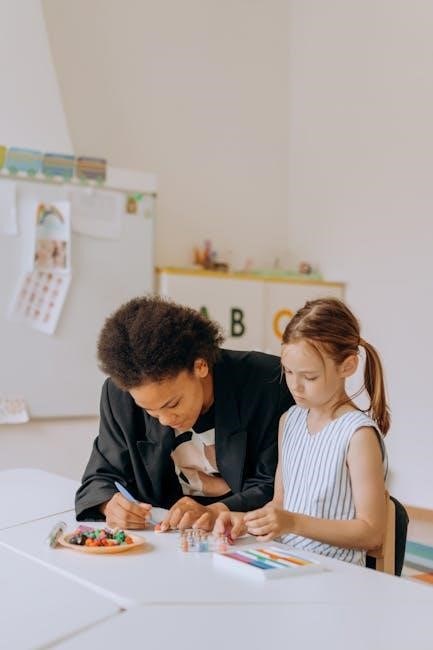
Special education teachers actively collaborate with parents, school staff, and outside professionals to support student success, forming integral teams for assessment and planning.
Working with Parents and Families
Establishing strong partnerships with parents and families is a cornerstone of a special education teacher’s role. Effective communication ensures a collaborative approach to a student’s education, fostering trust and shared responsibility. This involves regular updates on student progress, both academic and behavioral, utilizing various methods like meetings, phone calls, and written reports.
Teachers must actively solicit parental input during the Individualized Education Program (IEP) development process, valuing their insights into their child’s strengths, needs, and goals. Open dialogue allows for a unified strategy, extending learning beyond the classroom and into the home environment. Addressing parental concerns with empathy and providing resources to support their involvement are also vital components of this relationship. Ultimately, successful collaboration empowers families to advocate effectively for their child’s educational needs, leading to improved outcomes.
Collaboration with School Staff (Administrators, Counselors, Therapists)
Special education teachers rarely work in isolation; effective collaboration with school staff is paramount. Regular communication with administrators ensures alignment with school-wide policies and access to necessary resources. Counselors provide valuable insights into students’ social-emotional well-being, informing instructional strategies and behavior management plans.
Therapists – including speech-language pathologists, occupational therapists, and physical therapists – contribute specialized expertise to address specific student needs, as highlighted in the HCOE documentation. Jointly, these professionals assess students, design instructional plans, and review program effectiveness. Team meetings facilitate shared problem-solving and coordinated support. This interdisciplinary approach, as seen in various job specifications, guarantees a holistic and comprehensive educational experience tailored to each student’s unique profile, maximizing their potential for success.
Interagency Collaboration (Outside Professionals)
Effective special education extends beyond the school walls, necessitating collaboration with external agencies and professionals. This includes partnerships with medical providers, mental health services, and community-based organizations. These collaborations ensure students receive comprehensive support addressing needs beyond academic instruction, as implied by the need for integrated team approaches.
Special education teachers often coordinate with outside therapists, psychologists, and social workers to implement consistent interventions and monitor student progress. Navigating these interagency relationships requires strong communication skills and a thorough understanding of relevant policies. The Michigan Civil Service Commission emphasizes a variety of assignments, suggesting adaptability in working with diverse support systems. Ultimately, seamless collaboration with outside professionals is vital for providing a truly holistic and individualized education, maximizing student outcomes and well-being.

Specific Classroom & Student Support
Teachers adapt curriculum, implement behavior strategies, and provide tailored support for diverse disabilities, ensuring inclusive learning and addressing individual student educational plans.
Adapting Curriculum and Materials
Special education teachers expertly modify general education curriculum to meet the unique needs of each student, a core responsibility highlighted in various job descriptions. This adaptation involves simplifying complex concepts, breaking down tasks into smaller, manageable steps, and providing alternative methods for demonstrating understanding. Materials are often adjusted, utilizing assistive technology, visual aids, and hands-on activities to enhance accessibility and engagement.
Teachers may create individualized assignments, offer extended time for completion, or provide alternative assessment formats. The Humboldt County Office of Education emphasizes this role within severe/multiple handicapped classrooms, requiring teachers to design instructional plans tailored to individual student needs. Furthermore, adapting materials isn’t simply about simplification; it’s about ensuring equitable access to learning, fostering independence, and maximizing each student’s potential for success within the educational framework.
Behavior Management Strategies
Special education teachers employ a diverse toolkit of behavior management strategies to create a positive and productive learning environment. These strategies extend beyond traditional discipline, focusing on proactive approaches to prevent challenging behaviors and address underlying causes. Understanding individual student needs, as emphasized in job specifications, is paramount; teachers analyze behavior patterns to develop individualized behavior intervention plans (BIPs).
Techniques include positive reinforcement, clear expectations, consistent routines, and the use of visual supports. Teachers collaborate with counselors and therapists to implement effective strategies, particularly for students in severe/multiple handicapped classrooms, as noted by the Humboldt County Office of Education. The goal isn’t simply to control behavior, but to teach students self-regulation skills, promote positive social interactions, and foster a sense of safety and belonging within the classroom community.
Supporting Students with Diverse Disabilities
Special education teachers are uniquely equipped to support students with a wide spectrum of disabilities, ranging from learning differences and emotional disturbances to physical impairments and intellectual disabilities. The Bureau of Labor Statistics highlights the varied nature of this role, requiring adaptability and specialized knowledge. Teachers must understand the unique challenges each disability presents and tailor instruction accordingly.

This includes implementing accommodations and modifications, utilizing assistive technology, and collaborating with related service providers – therapists, counselors, and specialists – to ensure comprehensive support. Job descriptions, like those from the Michigan Civil Service Commission, emphasize the need to address diverse needs within various settings. Effective support necessitates a deep understanding of Individualized Education Programs (IEPs) and a commitment to fostering each student’s potential, promoting inclusion and maximizing their academic and personal growth.

Legal and Ethical Considerations
Special education teachers must adhere to the Individuals with Disabilities Education Act (IDEA), safeguarding student rights and maintaining strict confidentiality, as legally mandated.
Understanding Special Education Law (IDEA)
The Individuals with Disabilities Education Act (IDEA) forms the cornerstone of special education, guaranteeing a free and appropriate public education (FAPE) for eligible children with disabilities. Special education teachers are legally bound to understand and implement IDEA’s provisions, ensuring compliance in all aspects of their practice. This includes adhering to procedural safeguards, such as parental involvement in the IEP process and due process rights for families who disagree with educational decisions.
IDEA outlines specific requirements for identifying, evaluating, and providing services to students with disabilities. Teachers must be knowledgeable about eligibility criteria, assessment procedures, and the development of individualized education programs (IEPs). Furthermore, understanding IDEA’s emphasis on Least Restrictive Environment (LRE) is crucial, guiding decisions about student placement and ensuring access to general education settings whenever appropriate. Staying current with IDEA regulations and amendments is a continuous professional responsibility for special educators.
Maintaining Confidentiality and Student Privacy
Protecting student confidentiality is paramount for special education teachers, governed by both federal laws like IDEA and broader privacy regulations such as FERPA (Family Educational Rights and Privacy Act). Sensitive student information, including IEPs, assessment results, and medical details, must be handled with utmost discretion. Sharing this data requires explicit consent from parents or eligible students, with limited exceptions for authorized personnel directly involved in the student’s education.
Teachers must secure physical and digital records, preventing unauthorized access. Discussions about students should occur in private settings, avoiding public spaces or casual conversations. Maintaining professional boundaries is essential, refraining from sharing student information with individuals not directly involved in their educational program. A breach of confidentiality can have severe legal and ethical consequences, undermining trust and potentially harming the student. Upholding privacy demonstrates respect for students and their families.

Professional Development & Growth
Continuous learning is vital; special education teachers must stay current with best practices, evolving research, and legal changes to effectively support students.
Staying Current with Best Practices
Dedicated professional development is paramount for special education teachers, ensuring they provide the most effective support to students with diverse needs. This involves actively seeking opportunities to enhance knowledge of evidence-based instructional strategies, assistive technologies, and inclusive classroom practices. Regularly reviewing updates to the Individuals with Disabilities Education Act (IDEA) and related legislation is crucial, as legal frameworks directly impact service delivery.
Furthermore, engaging with professional organizations, attending workshops and conferences, and participating in collaborative learning communities fosters a continuous cycle of improvement. Staying informed about current research in areas like differentiated instruction, behavior management, and co-teaching allows educators to refine their skills and adapt to the evolving needs of their students; The Bureau of Labor Statistics highlights the importance of ongoing training for success in this dynamic field, emphasizing the need to remain adaptable and responsive to best practices.